A Designer's Review of the Christmas Fairy Embroidery
As I prepare my booth for the upcoming holiday craft fair, every design in my catalog gets a critical review. It's not just about whether it's pretty; it's about whether it will sell, produce well, and stand out on a crowded table. Today, I'm looking at the Christmas Fairy machine embroidery design. Let's see if this festive figure has the magic to become a star product.
First Impression & Market Mood
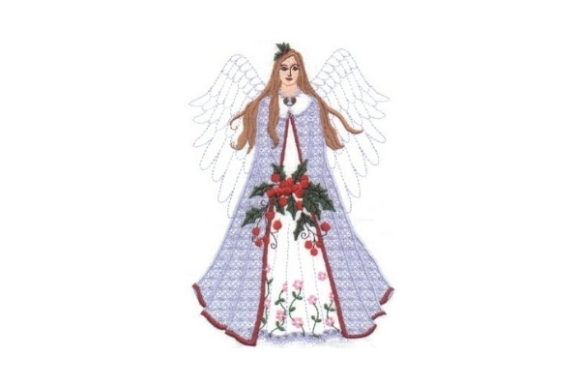
The title Christmas Fairy immediately suggests a festive, whimsical, and decorative feel. This isn't a minimalist geometric tree or a rustic farmhouse Santa. It leans into fantasy and charm. In a market saturated with classic motifs, this fairy offers a touch of elegance and story. It feels festive, playful, and inherently giftable. For customers looking for something a little different from the usual holiday décor, this could be a perfect find.
Product Application: Where the Fairy Shines
My craft fair table will feature a range of products, and placement is key. I evaluate where the Christmas Fairy design will perform best.
Standout Items for Immediate Attention
Pillow covers and small fabric pouches are ideal canvases. These items are often bought as gifts, and the fairy's decorative, elegant quality elevates them. A pillow with this design feels premium. Tea towels and aprons are another strong category. The design adds a special, non-generic holiday touch to kitchen items, making them feel like a handmade heirloom rather than a generic supermarket buy.
Strong Supporting Products
Tote bags and market bags work well if the design is sized appropriately as a focal point. It becomes a conversation starter. For caps, careful testing is needed due to the curved surface, but a well-placed fairy could be a unique seller. The design also has excellent potential as an embroidered patch. Patches are hugely popular, and a Christmas Fairy patch offers versatility—customers can apply it to their own jackets, bags, or stockings.
Booth Strategy & Samples
I always create at least one real mockup on a finished product to judge its in-person appeal. For the Christmas Fairy, I'd make a premium-looking pillow cover as my booth's sample hero item. This shows the design at its best, capturing customer attention from a distance. Smaller items like pouches can be clustered around it to drive multiple sales.
Practical Production & Selling Points
The romantic idea of a design must meet the reality of production.
Design Clarity & Production Scaling
The Christmas Fairy design needs to be understood at a glance. Does it look like a cohesive holiday figure even from a few feet away? This is crucial for craft fair success where customers scan tables quickly. If the design has tiny details or small lettering, it might lose clarity on textured fabrics like tea towels or on dark fabric backgrounds. I would test the design on scrap fabric first, especially on the actual materials I plan to use—like a terry towel for kitchen items or a canvas for totes.
For batch production, which is essential for a fair, I need to assess stitch density and thread count. High stitch density on large areas can be time-consuming and hard on machines. I also need to check thread contrast carefully. A fairy on a white pillow might need darker, vibrant threads, while on a dark tote bag, it might need lighter, metallic, or bright threads to pop. Stabilizer choice is non-negotiable here to maintain quality.
Online Sales & Photography
For my Etsy seller side, the design must photograph well. Embroidered items with good contrast and clear motifs look more professional in listings. The Christmas Fairy, if it has clean lines and defined shapes, will photograph beautifully, aiding my small shop product listings. Using printable mockups or design assets in my digital store can also help sell the embroidery file itself to other makers.
Critical Use Notes for a Professional Finish
Here are the hands-on designer thoughts I'd note before committing.
- Hoop Size & Fabric: Before running any batch, I must confirm hoop size requirements. If the design is large, it may not fit on smaller items like pouches or caps without resizing, which can affect detail integrity.
- Detail Preservation: If the design has delicate wings or intricate dress details, I need to see if they remain clear at a smaller size for accent pieces. Dense stitch areas can pucker on lighter fabrics if not stabilized correctly.
- Commercial Licensing: The description notes it comes with multiple embroidery file formats and can be used in multiple ways. I must confirm commercial licensing before selling finished products. This is a legal and ethical baseline for any commercial embroidery business.
- Fabric Color Testing: I would compare fabric colors. A fairy might look stunning on cream linen but less defined on bright red felt. Testing creates a winning product palette.
Final Booth Value & Customer Engagement
Ultimately, the Christmas Fairy design's value lies in its ability to create an emotional connection. It's not just a logo; it's a character. This can increase perceived product value and handmade quality. In my booth, it would contribute to brand consistency if I pair it with other whimsical or story-driven holiday items. It encourages buyer engagement—people might ask, "What's her story?" which opens a sales conversation.
My advice to fellow makers is this: the Christmas Fairy embroidery design has clear potential for holiday markets. Its festive and elegant mood sets it apart. However, its success hinges on practical execution. Test it thoroughly on your intended products. Invest in the right stabilizer and threads. Make a stunning sample for your display. And always, verify the embroidery file details and license for your craft fair product needs. With that care, this fairy could very well be the enchanting centerpiece of your holiday sales.